
Jude appeared in mid 1990s. From the very beginning its image and attitude shocked the whole polish art world and the so called alternative. Their complete refusal to follow any rules of whatever scene made impossible any kind relations with almost every circle or community. The name, the look, logo and the strict harsh monochrome esthetics were completely alien to almost everyone from the official mainstream to the deepest underground. Jude self acclaimed certain links with Industrial Culture / scene and the most extreme currents in punk or hardcore.
Jude openly reclaimed the importance of its local background. Their output is strictly connected to the post industrial city of Lodz. It can be described as sort of a reflection of the city’s decay – empty abandoned factories, deserted areas, violent streets and its deep social degradation. Almost everybody from Jude grew up in Lodz-Baluty – the area which during the II World War was the district of Litzmannstadt Getto. A big part of Jude’ work relates to atrocities of local history, the World War II, focus on eastern block Cold War tensions and central European legacy of totalitarian regimes of the XX-century. The appropriation of several motifs of agit prop, the regular interest in the worst sides of the mass media and social technology as well as everyday experiences in an dangerous environment are a constant source of inspiration. Jude’ harsh esthetics operates over the iconosphere of the post realcommunist, postindustrial city of Lodz. They can be called a sort of reaction to its inhuman dysfunctional conditions.
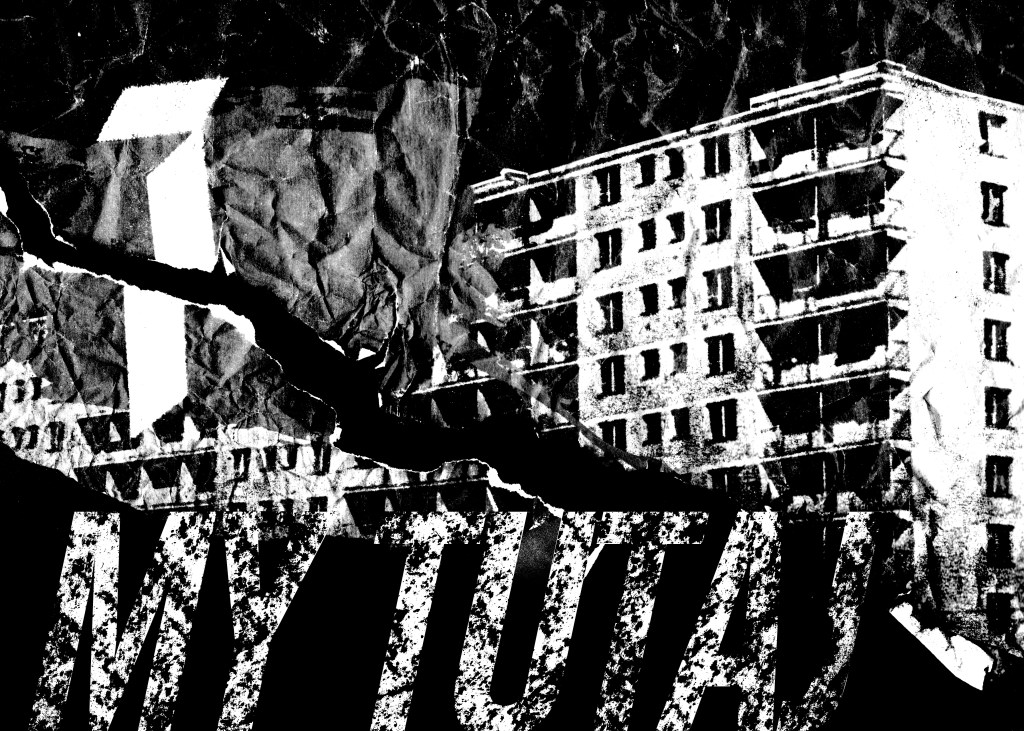
First Jude’ performances were assaults of organized noise and walls of feedback. Basic tools included electric guitars, metal scrap drums, backing loops / tapes plus howling vocals. Jude’ stance, extremities and rough esthetics immediately become a controversial hype, gaining some following as well as a big number of enemies. The name Jude, although well present in Poland (as a four letter insult) appeared disturbing and dangerous. Their art, excessive attitude provoked hateful backlash, sometime resulted in violent confrontations. From the start Jude dealt with rejection and boycott. Despite the negative response Jude’ live – appearances, the loud attack of sounds and video; guitar noise, electric drills, angle grinder’ sparks and the full-contact physical performances became legendary.
Too savage and caustic to fit the academic noise stereotypes, too antimusical to get the attention of the alternative music listeners. The band’s Sturm und Drang period did not result with big releases. Nothing more than two cassettes Ultimate Obedience (1997) and Sickness Bag (1998) were made in the nineties. In their violent passion for destruction and confrontation Jude members ignored or have forgotten (?) the principles of documentation and releasing their own music. The word Jude made almost impossible to play or tour outside Poland. Always in contra Jude never surrender.
Despite some periods of inactivity Jude never split up. Their attitude and identity made an impact on the growing industrial experimental underground in Poland. Up to this day the sound / music is only a part of used means. Jude media can vary: video, graphics, prints, posters, stencils etc; activities include curatorial / promotional work, local activism, exhibitions, performances. A space where radical music and visual arts work together. Last few years saw a new wave of releases: Stat (2015) Pigment (2017) Broken Pillar (2022) and some re-releases. A sort of raw determination, passion and some survival skills were Jude’ own tools over all these years. With all this good bad experience Jude is still a work in progress.

 JUDE
JUDE 